Sugar Beet Proves the Most Resilient Spring Crop in Drought Conditions
At its traditional December event for partners, Sunoko presented the results of this year’s campaign and the Sugar Beet Cultivation Manual.
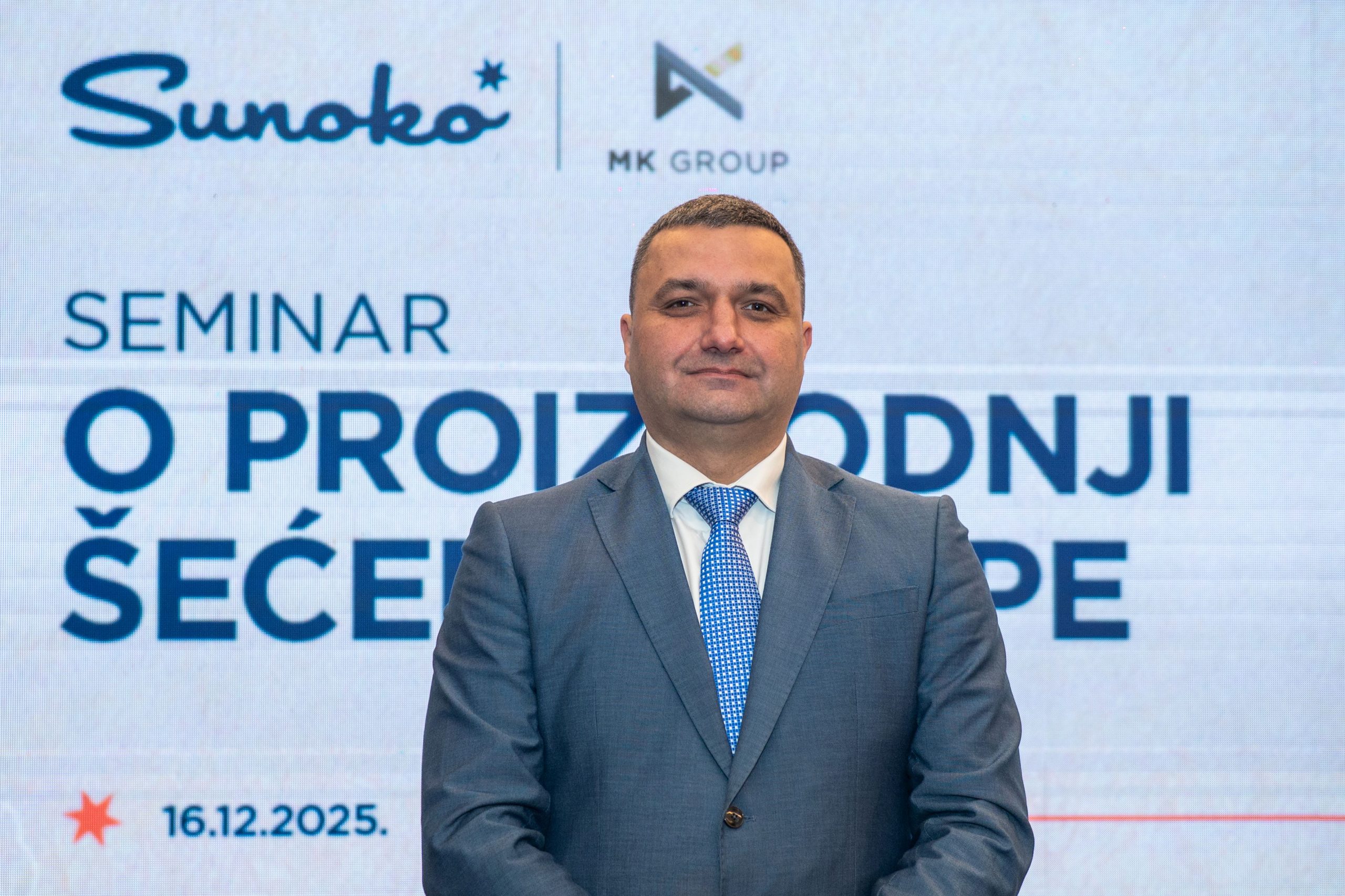
Novi Sad, 18 December 2025 – Sunoko, a member of MK Group, organized its traditional sugar beet seminar for partners and agricultural producers. On this occasion, the company presented the results of the 2025 campaign, highlighting that approximately 1.2 million tonnes of sugar beet were processed at its facilities during the year, resulting in the production of 170,000 tonnes of sugar. Although this was the second consecutive year marked by high temperatures and low precipitation, the highest yields were recorded in Srem with 61 tonnes per hectare, followed by Bačka with 53 tonnes per hectare, while yields in Banat reached 46 tonnes per hectare.
“Climate change is creating increasingly unpredictable conditions for the production of most arable crops. From late May to mid-July, agricultural producers faced both extreme drought and tropical heat waves. Despite these adverse conditions, sugar beet proved to be more tolerant than other arable crops, justifying its reputation as the ‘queen of the fields’. The expected average yield is around 54 tonnes per hectare, with a sugar content of approximately 16.5%, in line with the five-year average. Compared to previous years, full agrotechnical measures and crop protection practices recommended by our Research and Development Center were applied across a larger share of cultivated areas, which enabled exceptional results in such a challenging weather year. We are focused on expanding the adoption of these technologies among all producers, with particular emphasis on proper plot selection and support for the introduction of irrigation systems, which will ensure stability and further growth in sugar beet yields,” said Slobodan Košutić, Director of Sunoko, at the seminar.
“Thanks to the measures promoted through the technology developed by our Research and Development Center, the quality of raw materials this year was significantly better compared to the previous two years. All efforts aimed at increasing productivity and improving raw material quality are crucial to maintaining the competitiveness of the sugar industry, not only in the region but across Europe as well, given the extremely low sugar prices we have been facing for an extended period,” Košutić added.
“The Research and Development Center, together with colleagues from the raw materials sector, has continued its work on improving and promoting sugar beet production technology. The knowledge and achievements to date are the result of joint efforts by our experts and specialists in specific areas of sugar beet production. We have brought these insights together in the Sugar Beet Cultivation Manual, which was presented at the seminar. The manual outlines the technology required for successful sugar beet production, with a focus on key challenges and their solutions in modern farming. A special section is dedicated to climate change and plant stress, as well as tools available to mitigate these effects,” emphasized Saša Rajačić, Director of the Research and Development Center.
Lectures at the seminar were delivered by leading experts in the field of sugar beet protection. Dr. Goran Malidža from the Institute of Field and Vegetable Crops in Novi Sad addressed an integrated approach to weed control, presenting new methods that are particularly important given the growing number of active substances being withdrawn from use. Anja Milosavljević, Head of the Laboratory Services at the Research and Development Center, spoke about root and leaf diseases of sugar beet, with an overview of the latest research in this field. The panel discussion also featured experts from the region and sugar beet producers, who shared their experiences in addressing the challenges posed by climate change.
Sunoko remains committed to supporting agricultural producers in the coming year as well, with the goal of ensuring a stable and secure long-term supply of sugar for the Serbian market.

Latest news
❮
❯